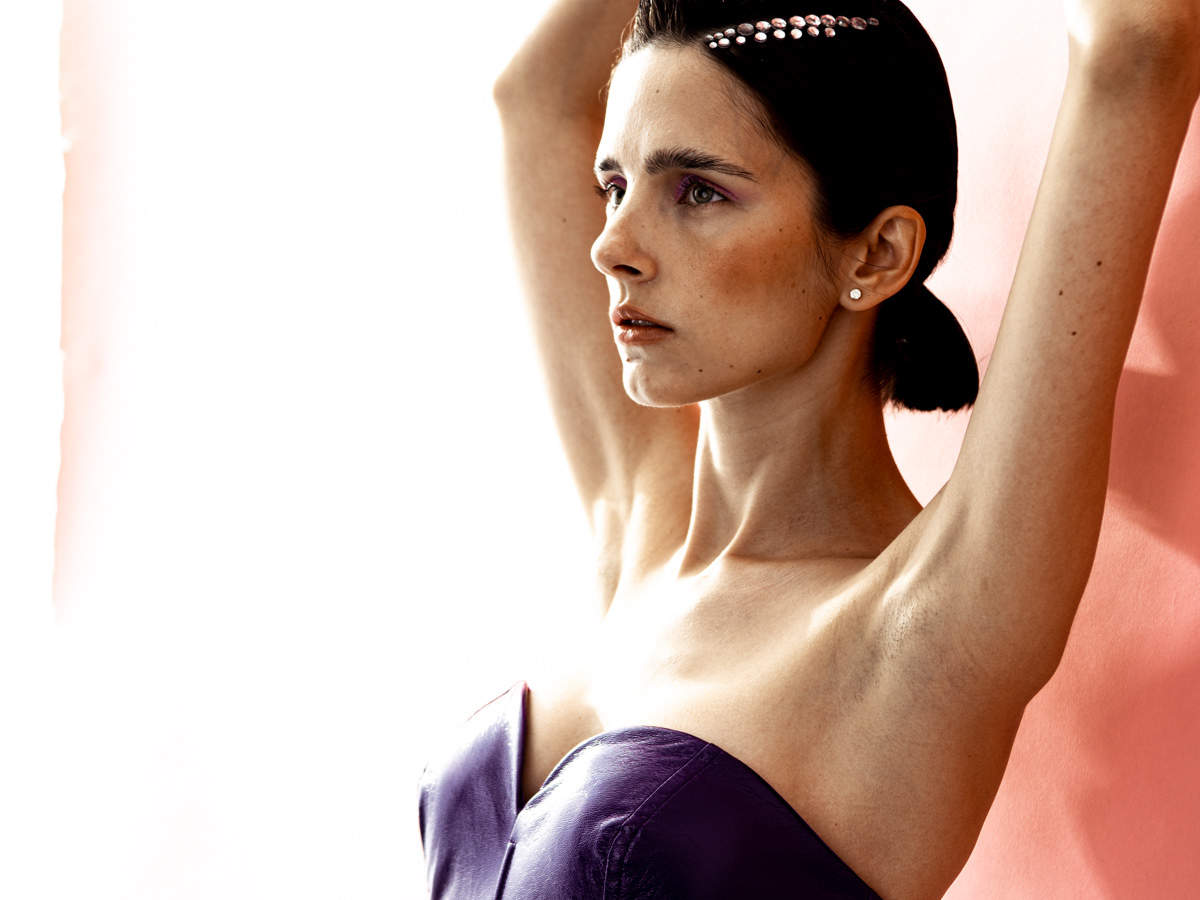

There are garments that dress the body, and there are garments that alter the space around it.
In the work of Krystian Szymczak, fabric seems to occupy that uncertain territory between clothing and architecture. It does not simply fall. It expands, ripples, folds, interrupts. It creates its own edges. At moments, it appears almost weightless; at others, it becomes strangely structural, as though something soft has been persuaded to behave like stone.
In this story, photographed by Macrae Marran, the body becomes the point where these contradictions meet.
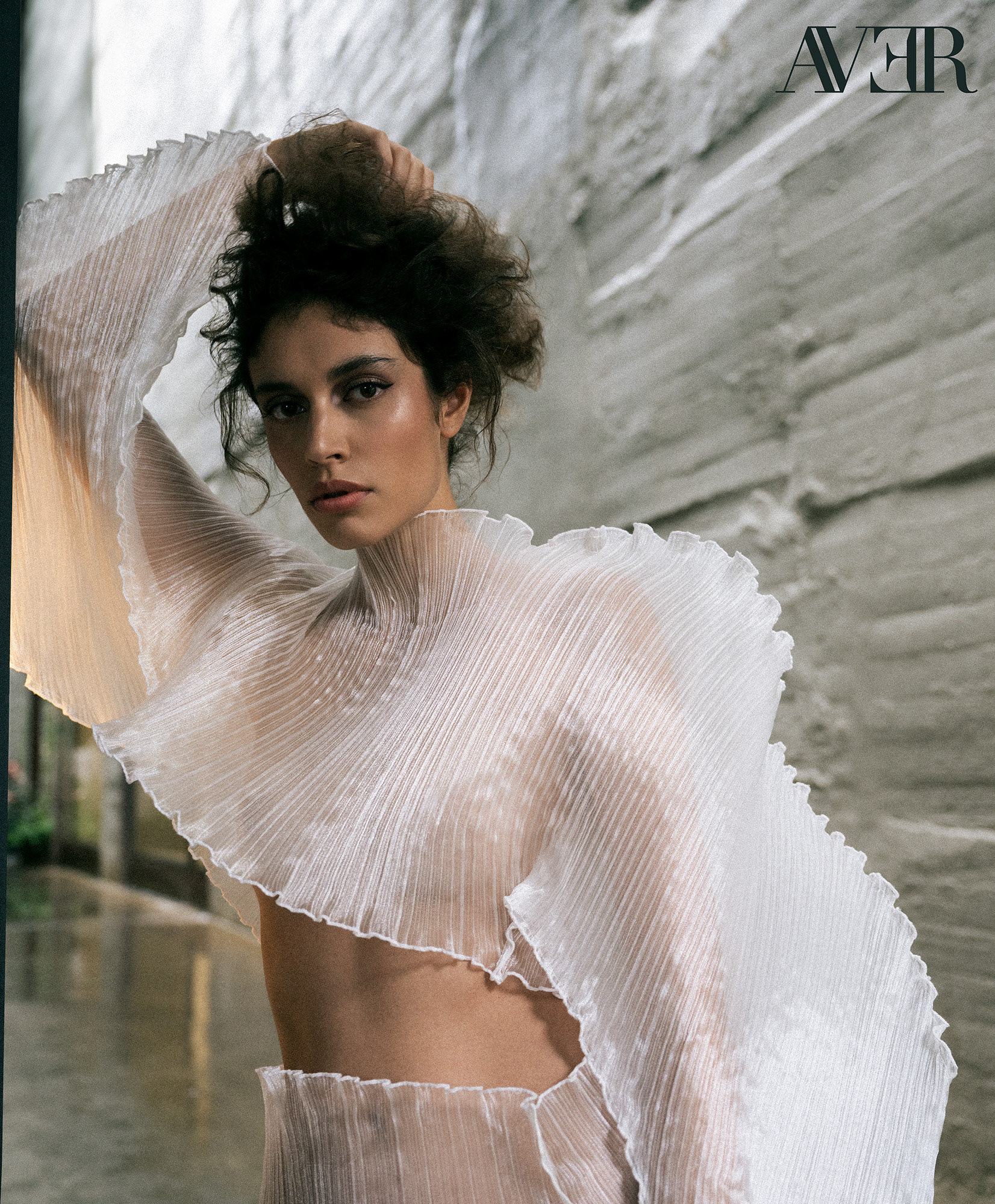

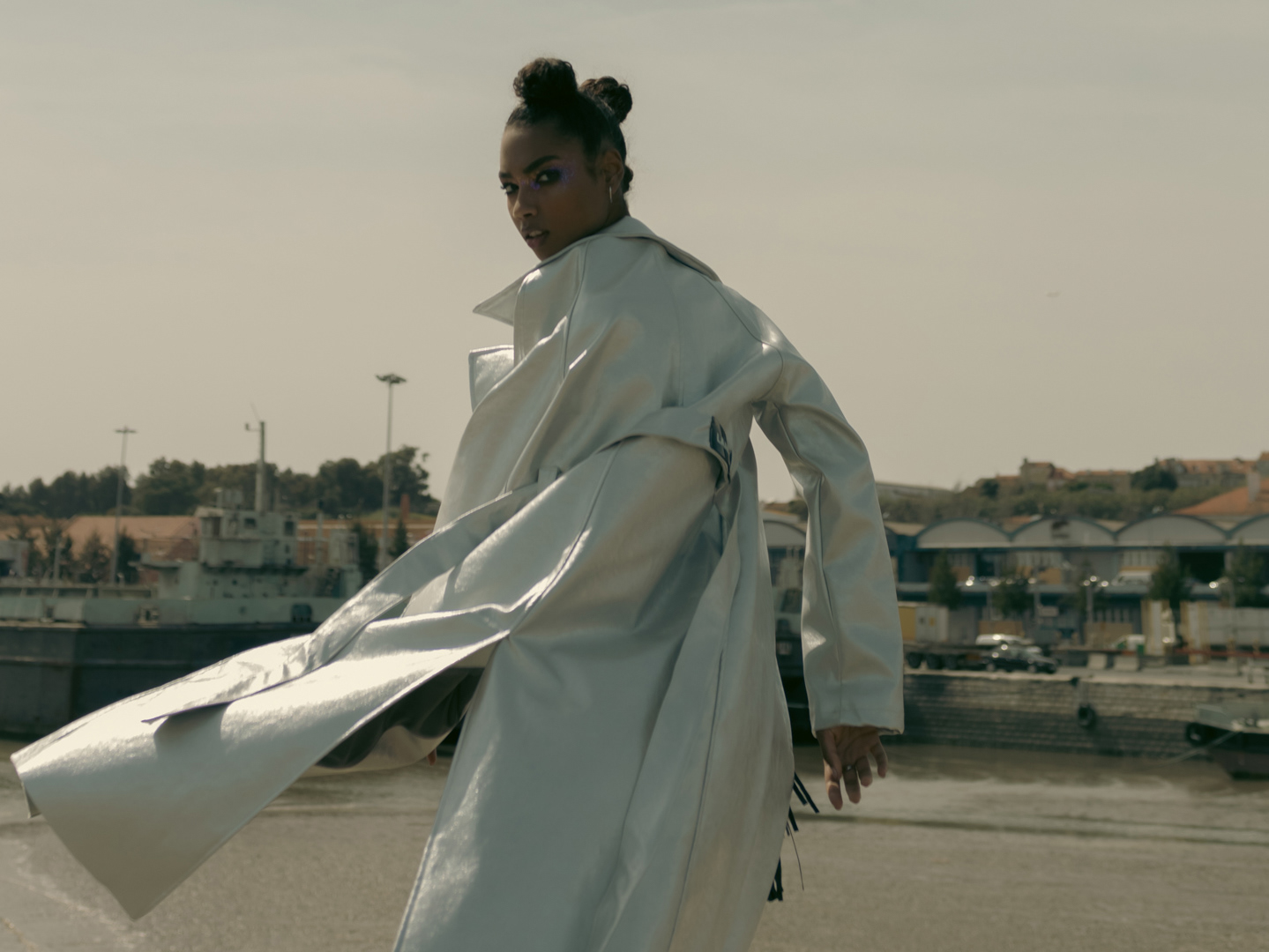
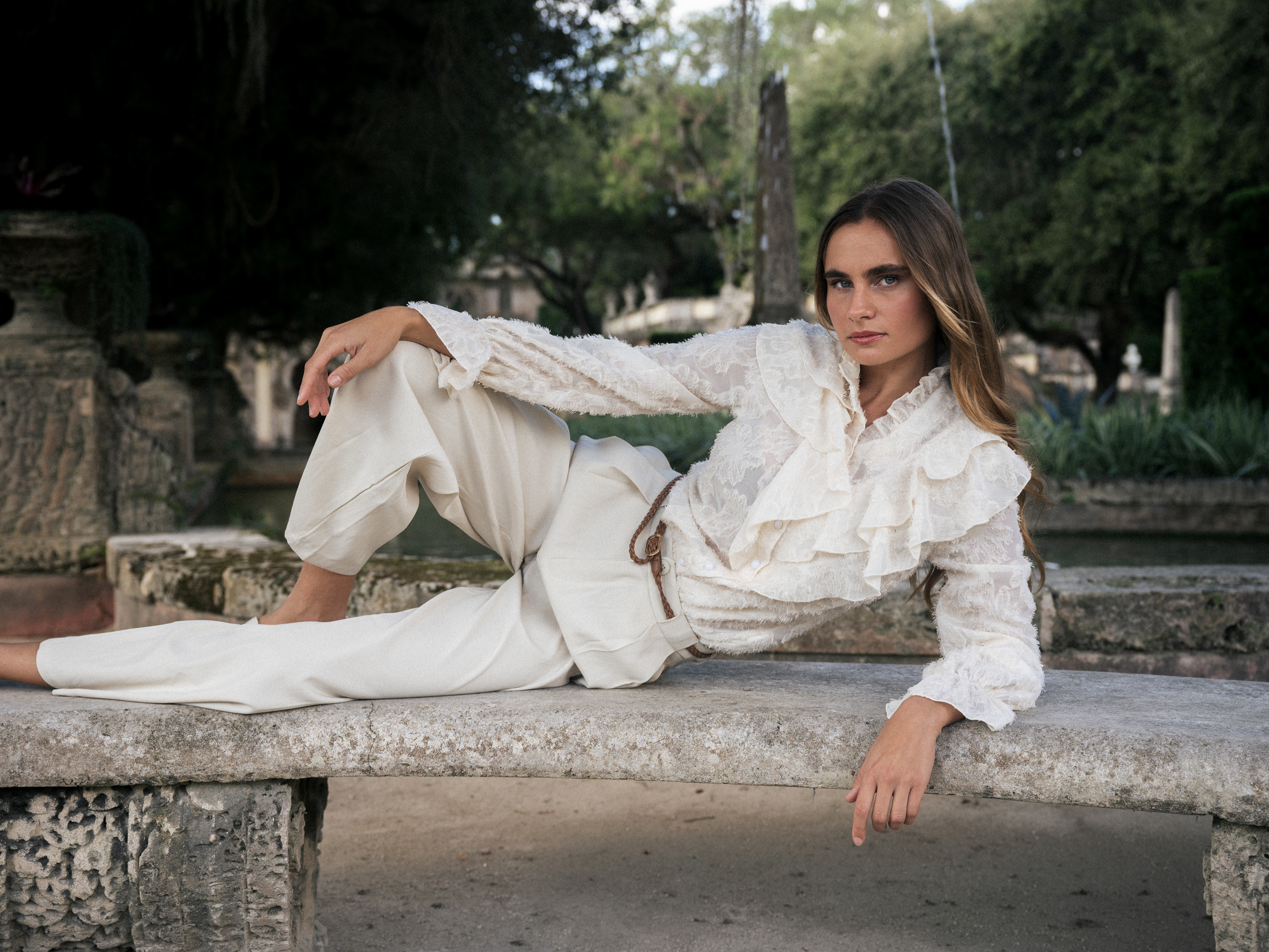
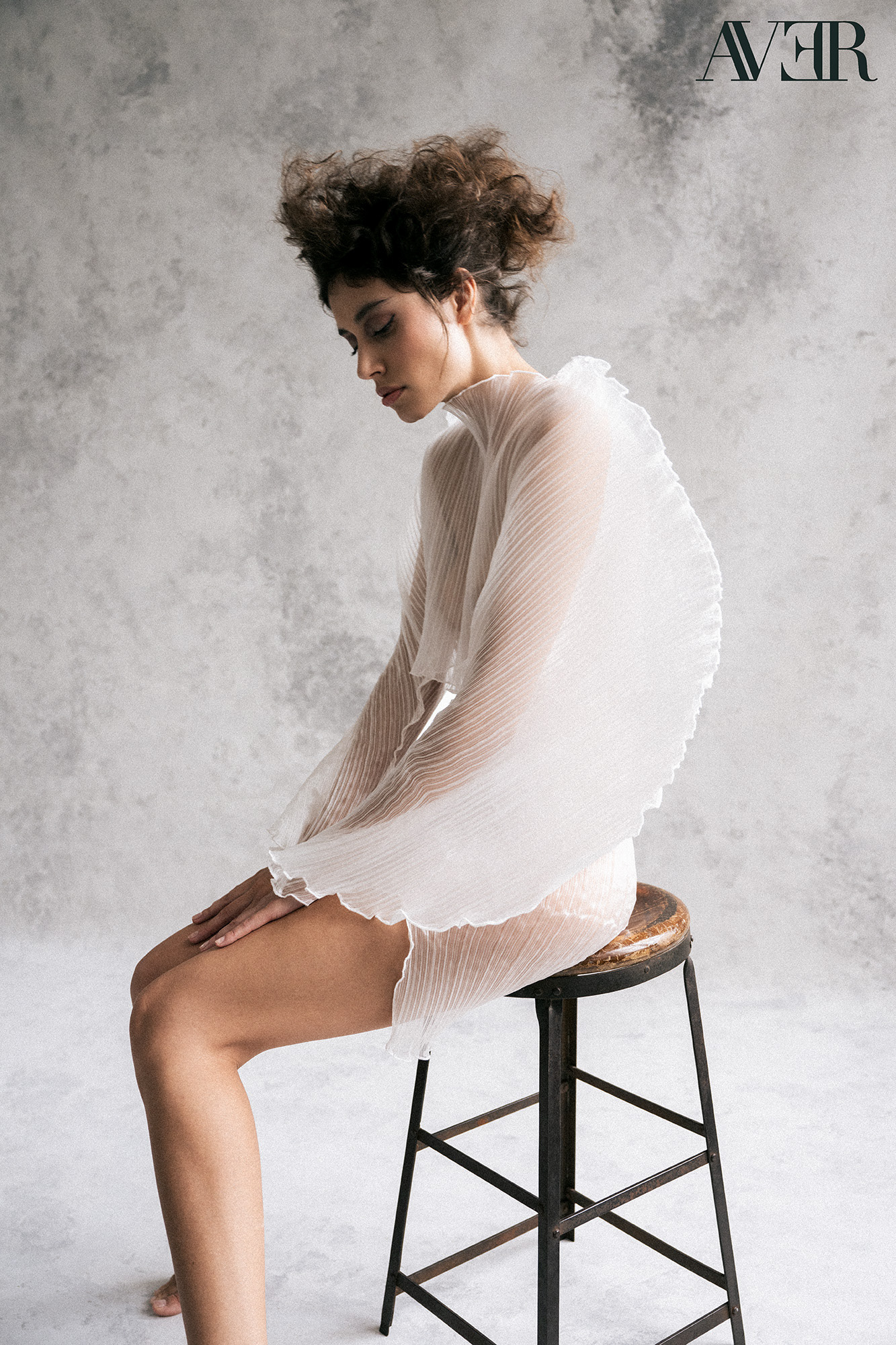
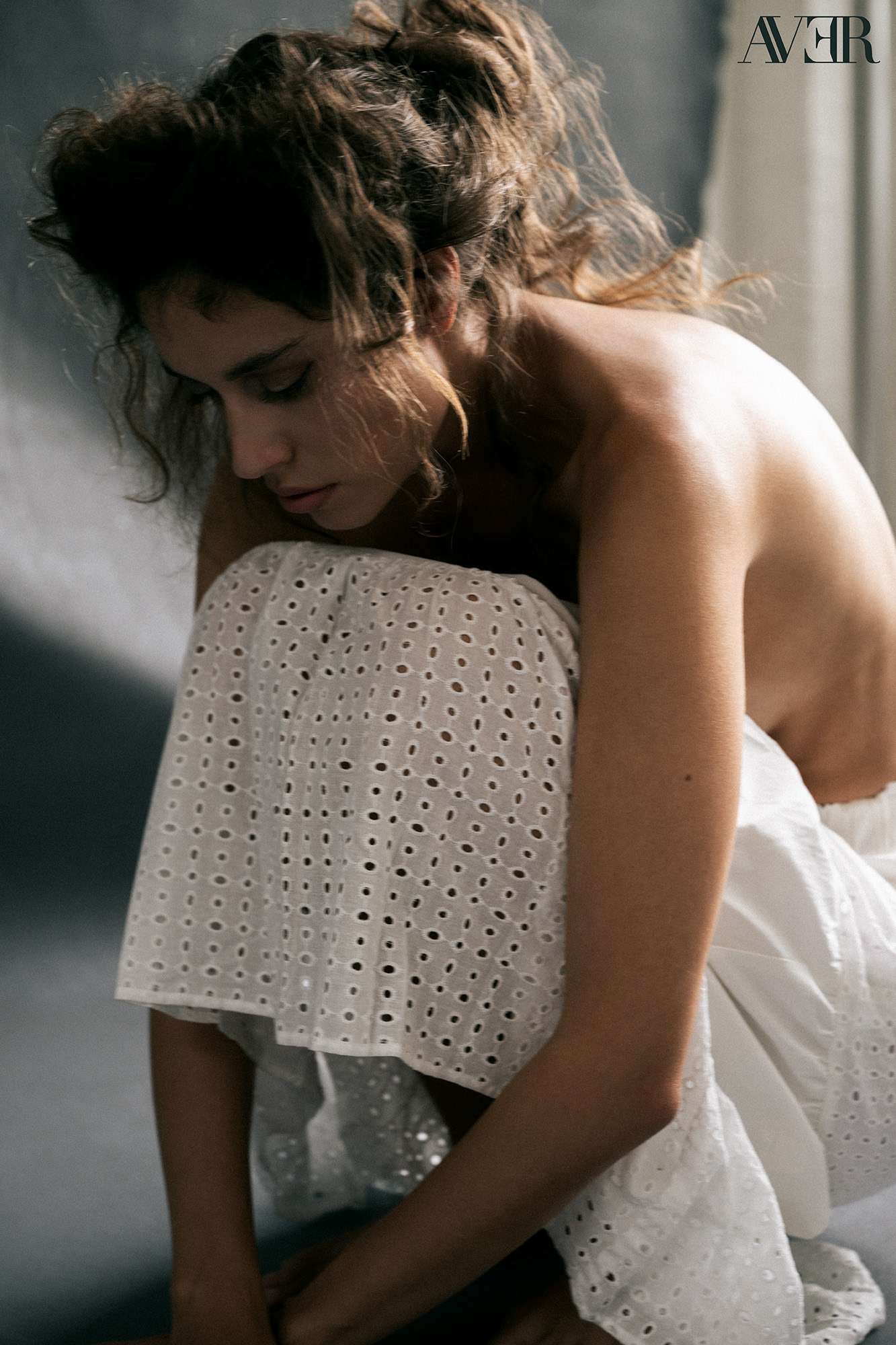
The first impression is one of whiteness—not pure, not clinical, but translucent and almost atmospheric. The garments hover close to the skin, revealing and concealing in equal measure. Their pleats catch light differently with every movement, creating shifting lines across the body. Sleeves extend outward. Ruffled edges refuse a clean boundary. Fabric seems to breathe beyond the figure.
Against rough masonry, industrial steel, glass and concrete, this softness becomes more pronounced.
The city is rigid. The clothing is not.
And yet the distinction is never quite that simple.
There is discipline in the garments. Every apparent irregularity feels considered. Their volume is controlled; their movement has been anticipated. What seems fragile is constructed with confidence. What appears spontaneous is held together by an underlying order.
The photographs inhabit the same contradiction.
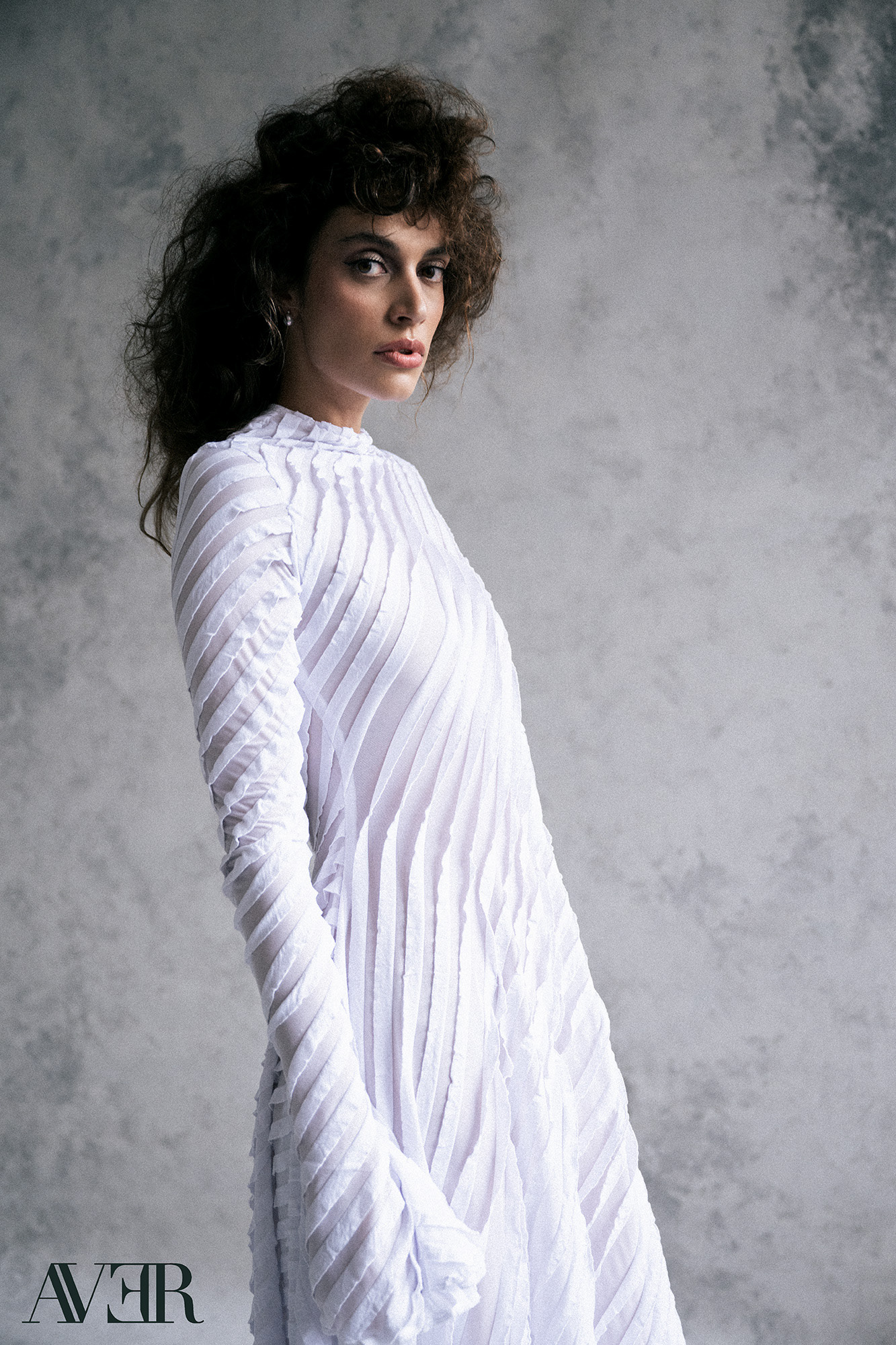
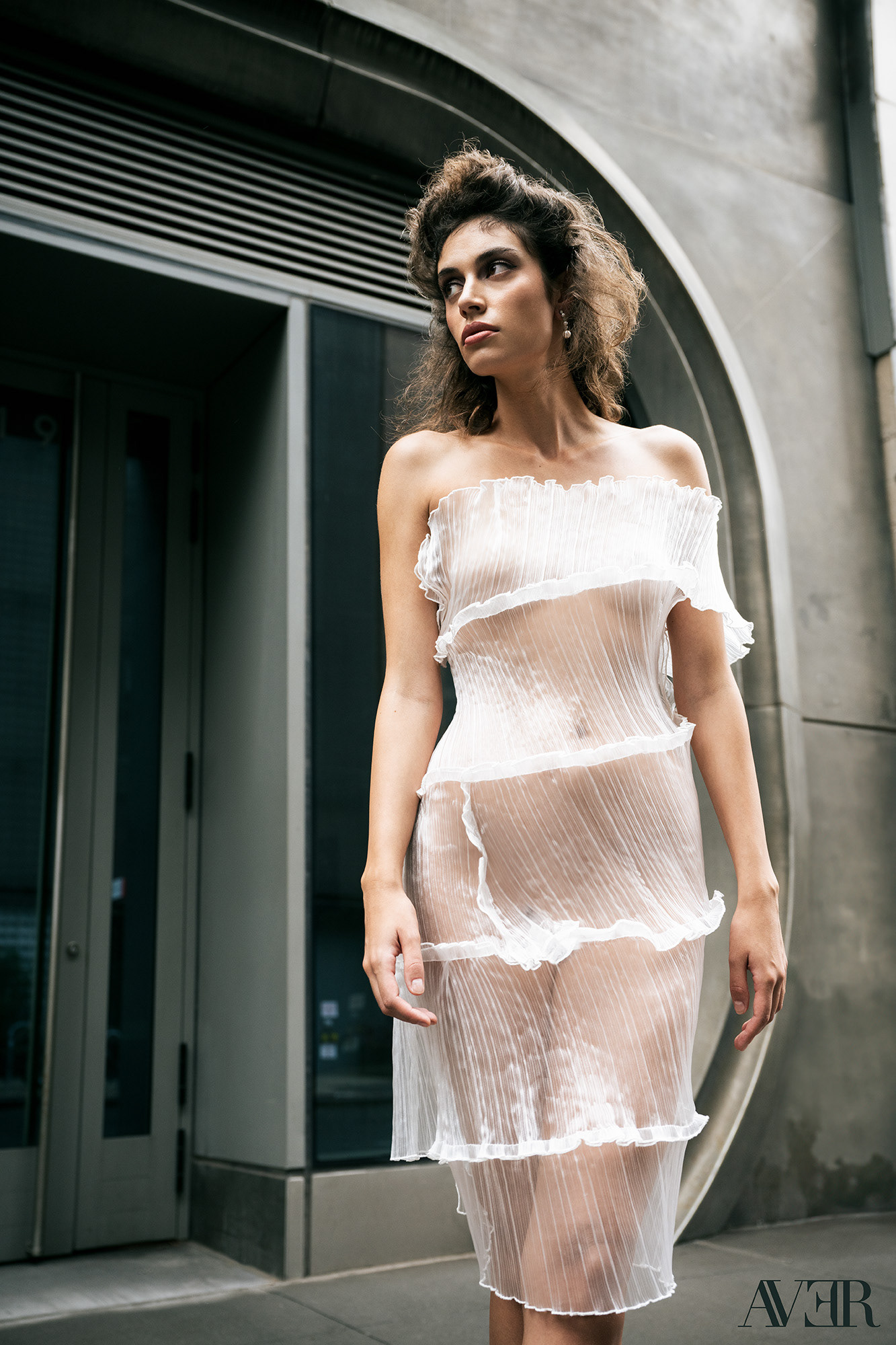
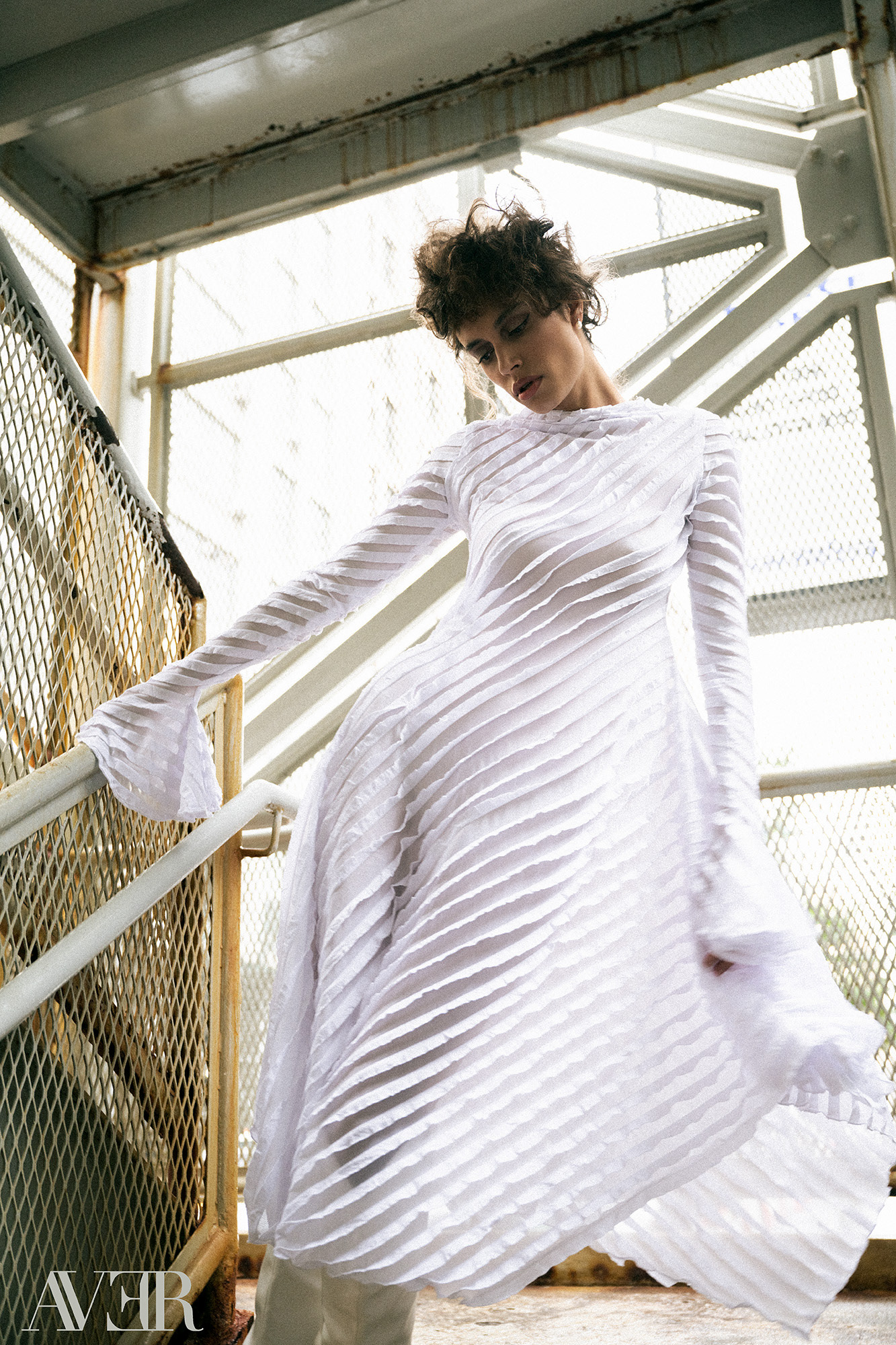
Marran moves between proximity and distance, between the psychological intimacy of a portrait and the harder geometry of an architectural frame. At times, Katy Dembowska appears almost monumental, photographed from below as fabric rises around her against an expanse of white brick or steel. Elsewhere, she folds inward, seated or lying against a seamless grey plane, the body suddenly private and quiet.
Scale shifts constantly.
A wall becomes landscape.
A sleeve becomes sculpture.
A face becomes the only still element inside a field of movement.
The white garments are especially mutable. In one image they recall paper, in another mist, in another something organic—a petal, a shell, a membrane. Their transparency prevents them from ever becoming entirely solid. Light enters them and changes them.
That quality creates a strange vulnerability. The clothes protect without hiding. They surround the body while continually allowing the body to reappear.
There is something almost theatrical about that relationship.
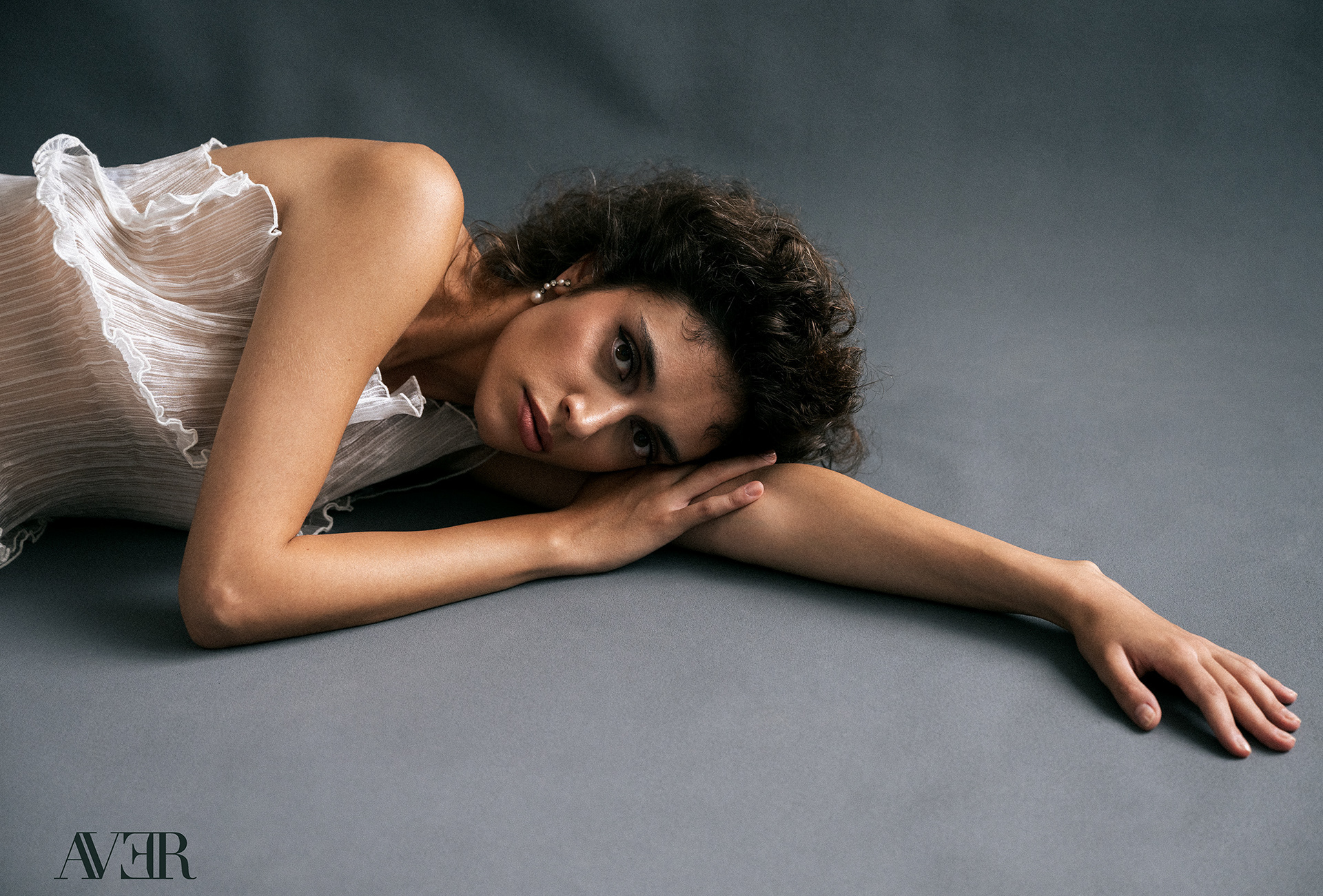
A garment can act as costume without becoming disguise. It can exaggerate gesture, reshape posture and change the way a figure moves through a room. The expansive sleeves and sculptural pleats do precisely that: they make even the smallest movement visible. A lifted arm changes the entire silhouette. A turn of the shoulder transforms the garment. Sitting, standing, leaning and reaching become part of the design.
Dembowska does not merely wear these pieces. She activates them.
Her physicality gives the story much of its rhythm. There are moments of stillness in which she appears contained by the clothes, and others where she seems to stretch beyond them. Her gestures move between strength and introspection: a hand at the head, arms crossed over the chest, a body folded toward the floor, a figure elongated beneath a grid of metal.
The clothing responds.
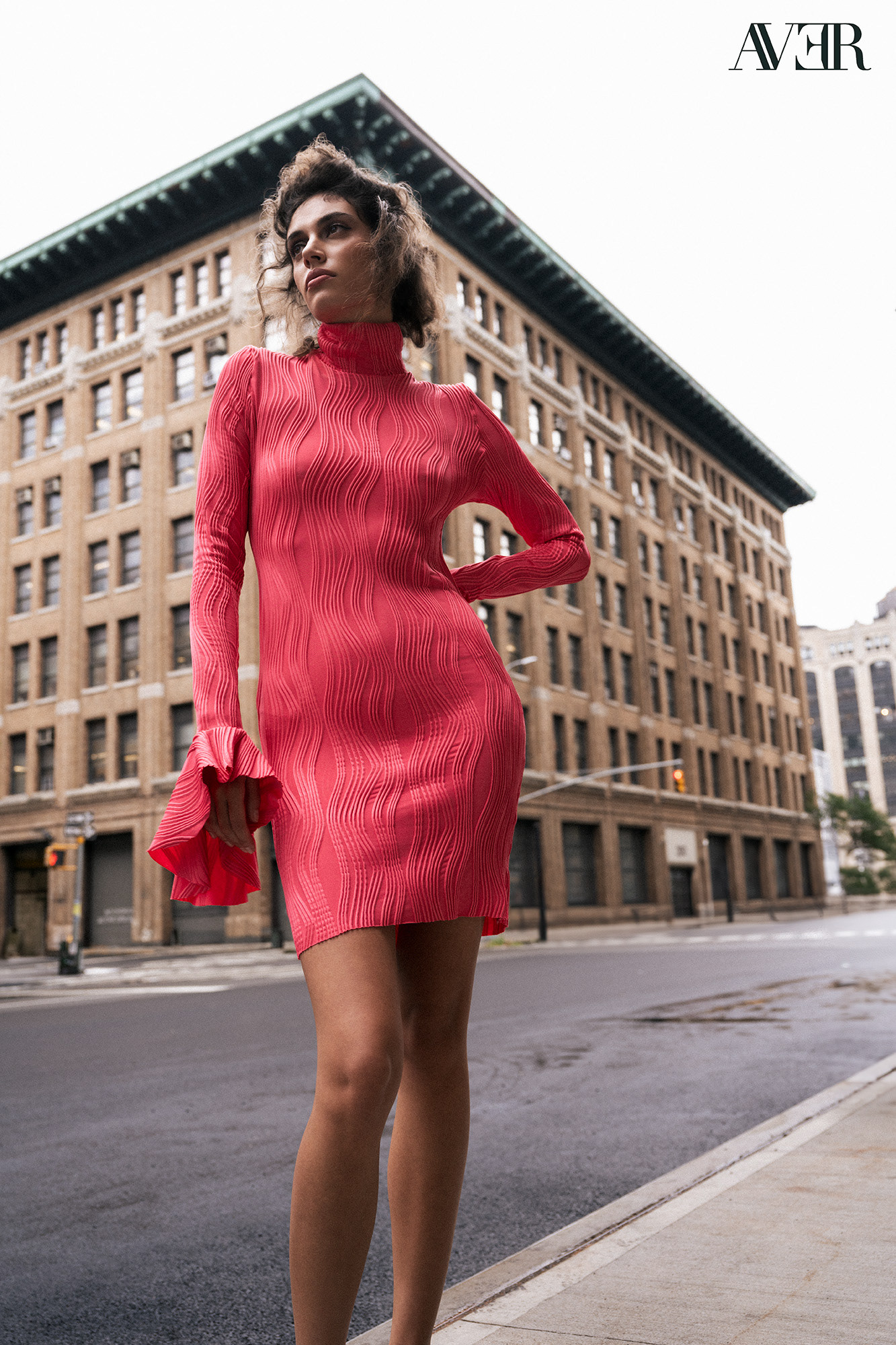
Then comes red.
After the near-monochrome restraint of the white pieces, the saturated dress feels almost like an interruption.
It does not whisper.
Against the muted city, it becomes graphic and immediate. Its narrow, undulating pleats echo the earlier garments, but the relationship to the body has changed. Here the fabric follows rather than floats. It traces the figure closely, turning texture into contour.
The color introduces heat into a story that had previously felt cool and mineral.
On the street, the woman and the garment become inseparable from the architecture surrounding them. Brick, pavement, steel columns and city façades create lines of their own, while Szymczak's dress produces another system of lines—smaller, softer, more fluid.
The contrast creates the tension that runs through the entire series.
Hard and soft.
Public and private.
Covered and exposed.
Structure and movement.
Control and accident.
These oppositions are never resolved. That is what gives the photographs their energy.
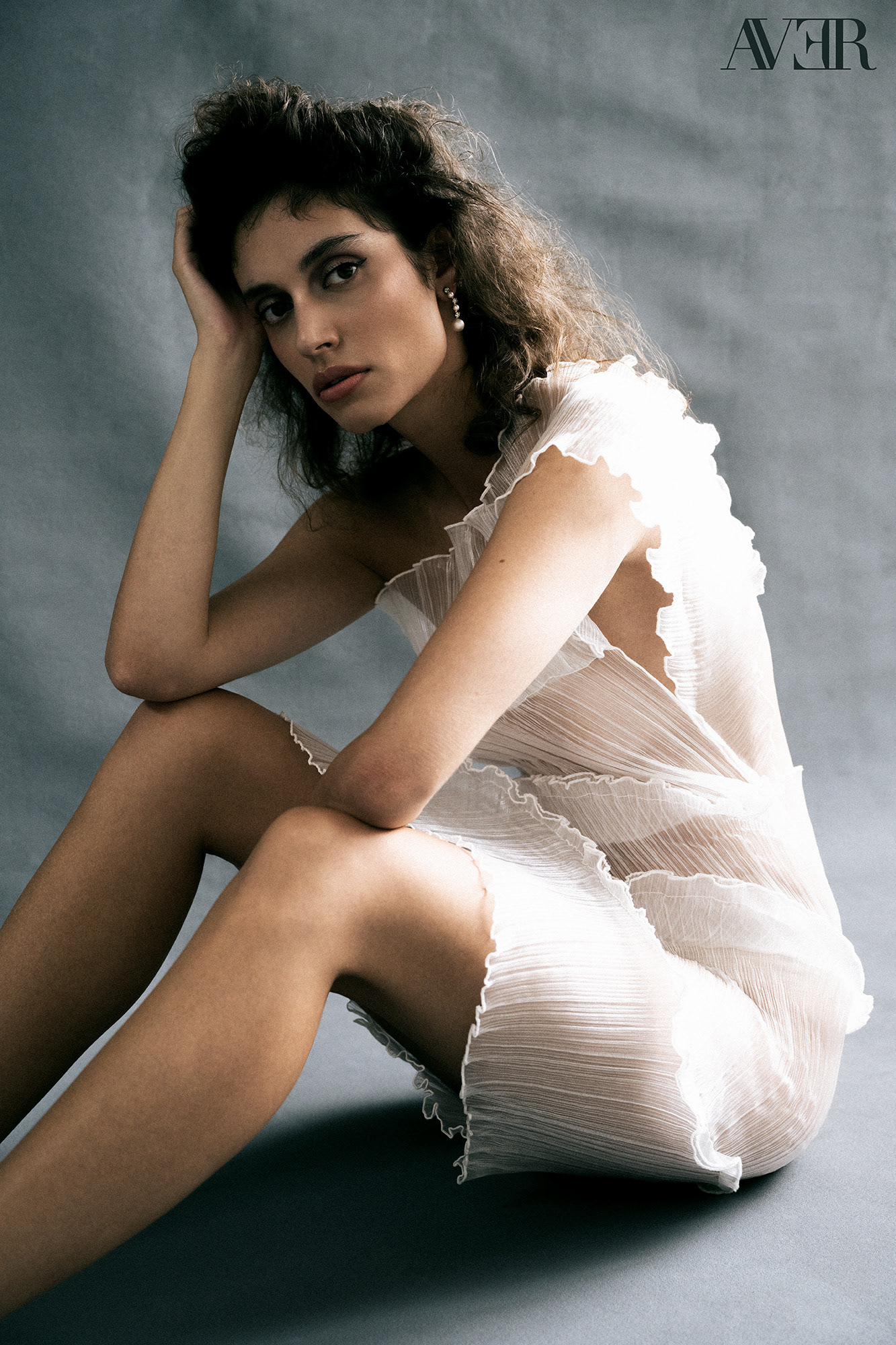

In the studio, the surroundings recede and the body becomes the architecture. Limbs create diagonals across the frame. Fabric pools, folds and pulls around them. The muted grey backdrop reduces the image to skin, cloth, gesture and light.
Outside, that relationship reverses. Buildings loom. Windows divide the frame. Steel columns repeat into the distance. The human figure becomes smaller in relation to the environment, but the clothing refuses to disappear inside it.
Instead, it creates its own presence.
There is a sense throughout the story that fashion is being treated not as decoration, but as a form of space-making.
The garment changes the outline of the body. The body changes the garment. Photography freezes that exchange for an instant before it changes again.
Dress by Zara
The resulting images occupy a place somewhere between fashion portraiture and visual study. They are concerned with clothing, but also with surface, gesture, proportion and atmosphere. They ask what happens when something fragile is given scale, when something transparent is made monumental, and when softness becomes capable of holding its own against the architecture of a city.
Perhaps that is the central paradox of Szymczak's clothes.
They appear delicate, but never weak.
They reveal, but do not surrender.
They move constantly, yet retain their structure.
And in Marran's photographs, that tension becomes the story itself: a body moving through a world of hard surfaces, carrying with it an architecture of its own.
Model Katy Dembowska @katydembowska
Designer & Wardrobe Stylist Krystian Szymczak @kry_szy
Photographer Macrae Marran @macraemarran
Hairstylist Payton Holbrook @boytoy9
Makeup Artist Jas Doyle @jasdoylemakeup
Editorial Coordinator @agatadrogowska6